



The Best Cargo Net for Every Hauling Job: Trucks, Trailers, Roof Racks & More
Whether you're hauling lumber in a pickup, loading luggage onto a roof rack, or keeping groceries from rolling around your SUV, there’s one piece of gear that simplifies it all — the cargo net. This humble tool is one of the most versatile, affordable, and effective ways to keep cargo secure, yet many haulers don’t realize just how many different types of cargo nets exist or how to choose the right one.
This guide breaks down the best cargo nets for every hauling situation. From truck beds to trailers to UTVs and daily drivers, you’ll find exactly what to look for and how to choose the right net for your next job.

Why Cargo Nets Are a Must-Have for Hauling
Tie-down straps are great for tension and ratchet force, but sometimes you just need full-surface coverage. A cargo net spreads out, stretches over your load, and grips from multiple directions at once. This gives you consistent pressure across the entire surface, making it ideal for:
- Irregular loads
- Quick-access hauling
- Delicate gear you don’t want to crush
- Jobs that involve multiple loose items
- Any scenario where bouncing, sliding, or shifting is a risk
Cargo nets are easier to use than multiple individual straps, especially when speed and flexibility matter. The best part is that a properly sized net often covers an entire load in one go.
The Best Cargo Net for Truck Beds
What to Look For
A truck bed cargo net should be:
-
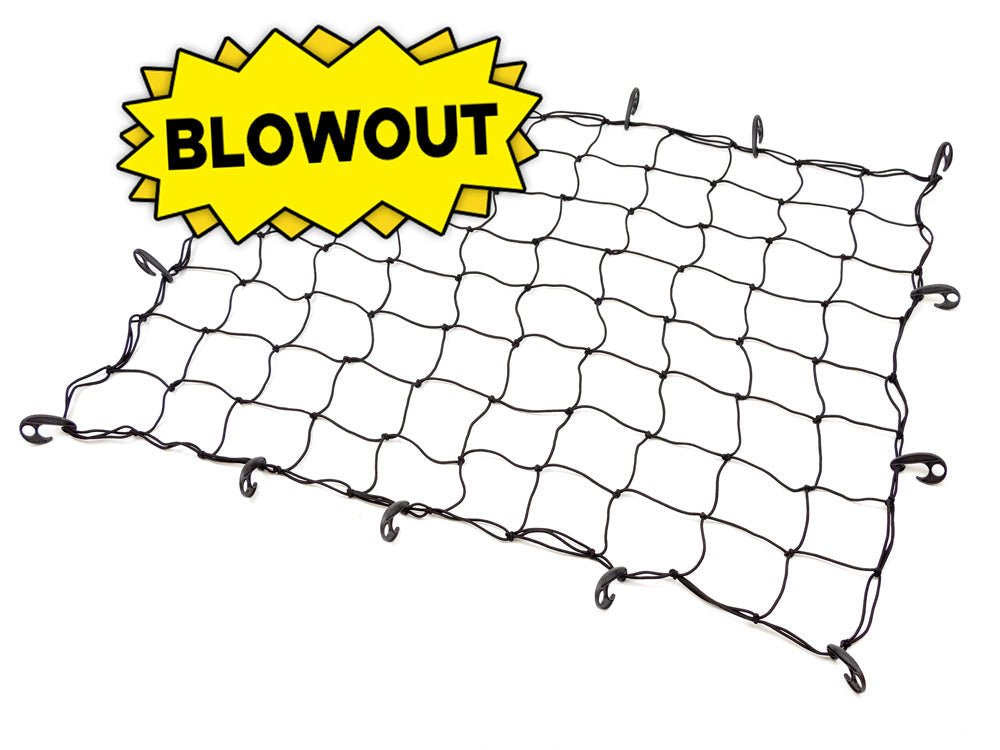
Heavy-duty and sized to match your truck bed
-
Built with coated hooks or anchor loops
-
Made from UV-resistant webbing or thick elastic
- Reinforced around the edges to prevent stretching over time
You’ll want something that can stretch across the full bed, but still hold firm when tightened. For light hauls, stretchy elastic nets are great. For heavier jobs, go with a webbing net and adjustable tension straps.
Use Cases
- Holding down lawn tools or moving boxes
- Keeping grocery bags from sliding around
- Securing tarps or blankets over gear
- Cross-town hauls of mulch, lumber, or equipment
Pro Tip
Go slightly smaller than your bed size if using an elastic net, since you’ll get more tension when stretched. For non-stretch nets, match your bed size or go adjustable with buckled edges.
The Best Cargo Net for Utility Trailers
What to Look For
Trailer cargo nets should be:
-
Built from non-stretch webbing for firm tension
-
Equipped with multiple fixed hooks or carabiners
-
Rated with a high working load limit
- Able to withstand wind pressure and road vibration
Look for models with integrated perimeter straps and adjustable anchor points. A good trailer net turns your open trailer into a secure cargo box.
Use Cases
- Hauling landscaping debris or tools
- Carrying large bags of feed, mulch, or supplies
- Securing lightweight machinery or recreational gear
- Keeping tarped loads in place on the highway
Pro Tip
Use cargo nets over tarps, not under. This keeps airflow from catching the tarp and inflating it like a balloon.
The Best Cargo Net for Roof Racks
What to Look For
Roof rack cargo nets need to be:
- Sized to match your rooftop basket or cargo tray
- Elastic enough to stretch across uneven loads
- Strong enough to resist high-speed wind drag
- Lightweight but weather-resistant
Look for nets with multiple plastic or coated metal hooks and dense bungee material. Choose one with mesh small enough to grip smaller bags or soft-sided duffels without letting them shift through gaps.
Use Cases
- Securing luggage or camping gear
- Holding duffel bags or coolers
- Adding extra containment over a roof box or soft shell carrier
- Keeping loads low and compressed during highway travel
Pro Tip
Avoid stacking gear too tall. Wind resistance increases rapidly with height, which can cause excessive lift even with a good cargo net. Keep things flat, tight, and compressed.
The Best Cargo Net for Motorcycles
What to Look For
Motorcycle cargo nets should be:
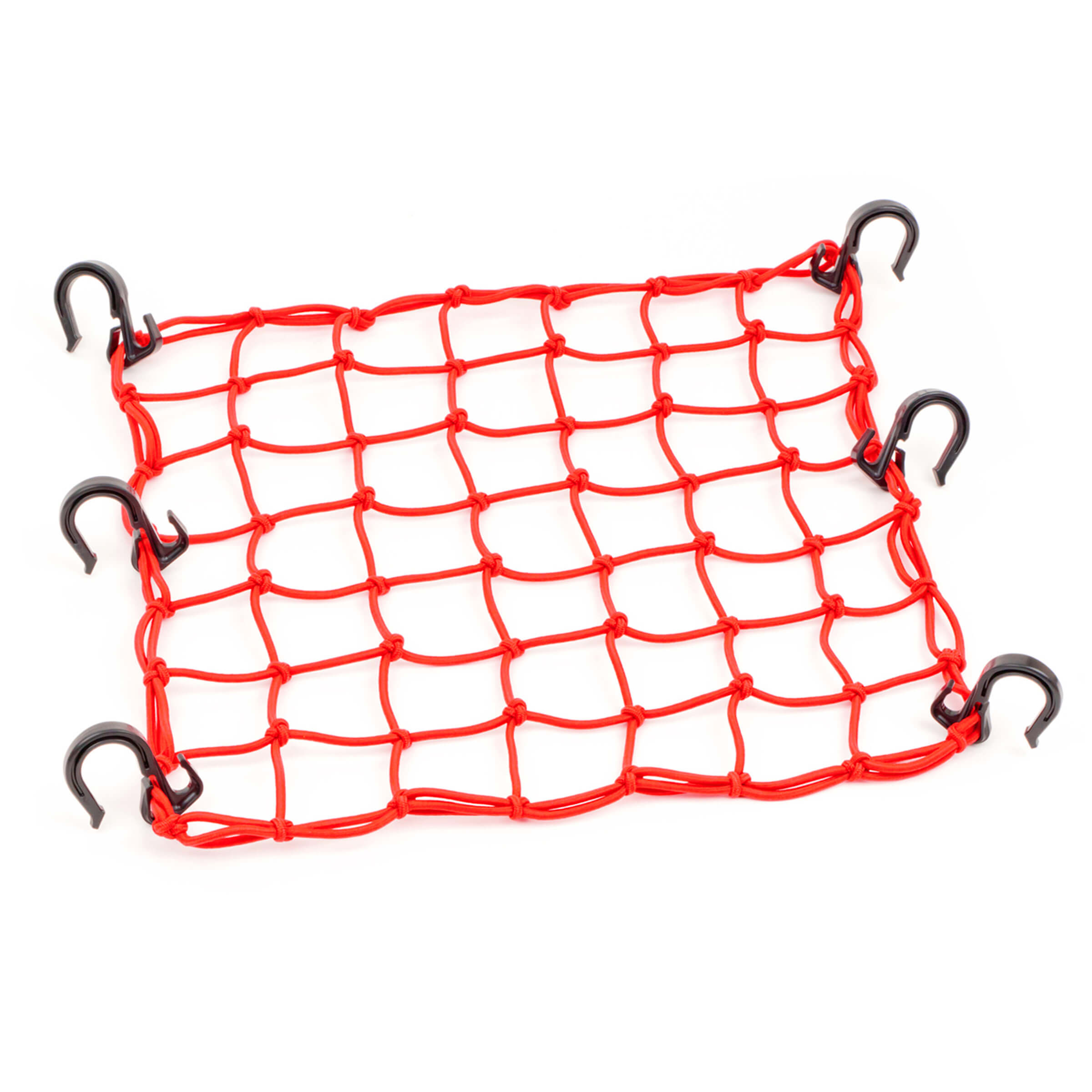
- Compact, lightweight, and easy to stash
- Made from thick elastic cord
- Equipped with six or more durable hooks
- Small in grid size to hold soft items without slipping
Motorcycle nets are designed to wrap around the pillion seat, top box, or luggage rack. They’re perfect for holding small items on solo rides, like jackets or lunch bags.
Use Cases
- Commuting with a backpack or helmet
- Carrying groceries or a gym bag
- Quick trips that don’t require saddlebags
- Holding down layers or rain gear
Pro Tip
For extra security, cross the net over itself after hooking to form an X-pattern. This adds downward force and stops the net from sliding off during hard acceleration or braking.
The Best Cargo Net for UTVs and Off-Road Vehicles
What to Look For
Off-road cargo nets must be:
-
Built from heavy webbing rather than elastic
-
Resistant to mud, UV rays, and impact
- Adjustable to fit over irregular gear
- Designed to attach to UTV racks, roll cages, or utility boxes
Because off-road terrain introduces bounce, rattle, and constant shaking, you need a net that grips and stays put even when the trail gets aggressive.
Use Cases
- Carrying tools, gas cans, or recovery gear
- Securing coolers or utility boxes in the rear bed
- Wrapping around awkward items like fencing or lumber
- Keeping loads stable through jumps, rocks, and washboard roads
Pro Tip
Pair your net with foam or padding under sharp edges to extend the life of your webbing. Rocks and hardware can rub through even the toughest strap over time.
The Best Cargo Net for SUVs and Interior Use
What to Look For
Interior nets for SUVs or hatchbacks should be:
- Flat or hammock-style
- Flexible enough to accommodate various shapes
- Designed to hook into existing cargo anchors
- Easy to remove or fold when not in use
These nets usually go inside the vehicle, keeping groceries, sports gear, or daily items from rolling around during stops or turns.
Use Cases
- Preventing shopping bags from tipping
- Securing gym gear or sports balls
- Holding strollers or foldable chairs upright
- Separating items in multi-row vehicles
Pro Tip
Use multiple smaller nets rather than one large one inside the cabin. That way you can reposition them to suit different haul sizes without covering too much floor space.

Features to Consider When Buying a Cargo Net
No matter the type of hauling job, there are a few key features that separate a good cargo net from a frustrating one.
Hook Material
Look for:
Stretch or No Stretch?
Elastic nets are great for lightweight or compressible loads. Non-stretch webbing nets are better for heavy items or precision tension.
Edge Reinforcement
Choose nets with:
- Reinforced perimeter straps
- Sewn-in edge cords
- Secure hook attachment points
Frayed or weak edges are usually the first point of failure in a cheap net.
Size Versatility
Choose a net slightly smaller than your load space if it stretches. For webbing nets, adjustable hooks or buckle systems allow for a custom fit without overpulling.
How to Store Your Cargo Net for Longevity
Cargo nets are only effective if they’re in good shape. Here’s how to keep yours ready for the long haul.
- Rinse off dirt, mud, or salt after use
- Let it dry before storing to avoid mildew
- Roll or fold neatly to avoid twisted cords
- Store in a dry bag, toolbox, or gear bin
- Check hooks and anchor points for rust or wear
- Replace worn nets before they fail
A good cargo net can last years if treated right. A $20 net is a lot cheaper than replacing lost gear from a blowout.
Final Thoughts
The best cargo net for your needs depends on how, where, and what you’re hauling. Trucks, trailers, motorcycles, roof racks, and UTVs all benefit from the added security and flexibility that cargo nets provide.
Remember:
- Match net size and strength to your load
- Consider stretch versus firm webbing
- Choose coated hooks for safety and surface protection
- Maintain your net and check tension before every haul
Cargo nets offer speed, simplicity, and peace of mind — exactly what you want when you're rolling down the road with gear in tow.