


Motorcycle Ratchet Guide for Riders Who Haul With Confidence
Introduction: Why Every Serious Rider Needs to Master the Motorcycle Ratchet
If you haul your bike even a few times a year, you already know this truth. A sloppy tie-down job can ruin your day fast. Bent bars, blown fork seals, scratched paint, or worse, a bike on its side halfway to the track.
That is why understanding the motorcycle ratchet matters. Not just owning one, but knowing how it works, how to use it properly, and how to choose the right setup for your bike and hauling style.
In this guide, you will learn how a motorcycle ratchet actually works, how experienced riders secure bikes step by step, the most common mistakes that cause damage, and how to choose PowerTye tie-down solutions that are proven on the road, at the track, and in the dirt. This is written from the perspective of riders who have loaded bikes in the dark, in the rain, and at gas stations when something went wrong.
By the end, you will know exactly how to tie down your motorcycle with confidence.
What Is a Motorcycle Ratchet and How Does It Work?
A motorcycle ratchet is a mechanical tensioning device built into a tie-down strap. It allows you to tighten a strap incrementally and lock it in place so it cannot loosen during transport.
Unlike cam buckle straps that rely on spring tension, a ratchet uses a geared mechanism and pawl system. Each pump of the handle pulls the strap tighter and locks it in place. Once engaged, the strap will not slip unless you deliberately release it.
Why Ratchet Tie-Downs Are Preferred for Motorcycles
Experienced haulers choose ratchets for a few key reasons.
First, they provide precise tension control. You can snug the bike down exactly where you want it without guessing.
Second, they resist vibration. Long highway runs, potholes, and trailer bounce will not cause a properly set ratchet to loosen.
Third, they offer higher load ratings. Quality ratchet tie-downs like those sold by PowerTye are built specifically for motorcycle transport, not general cargo.
That combination makes a motorcycle ratchet the backbone of a secure hauling system.
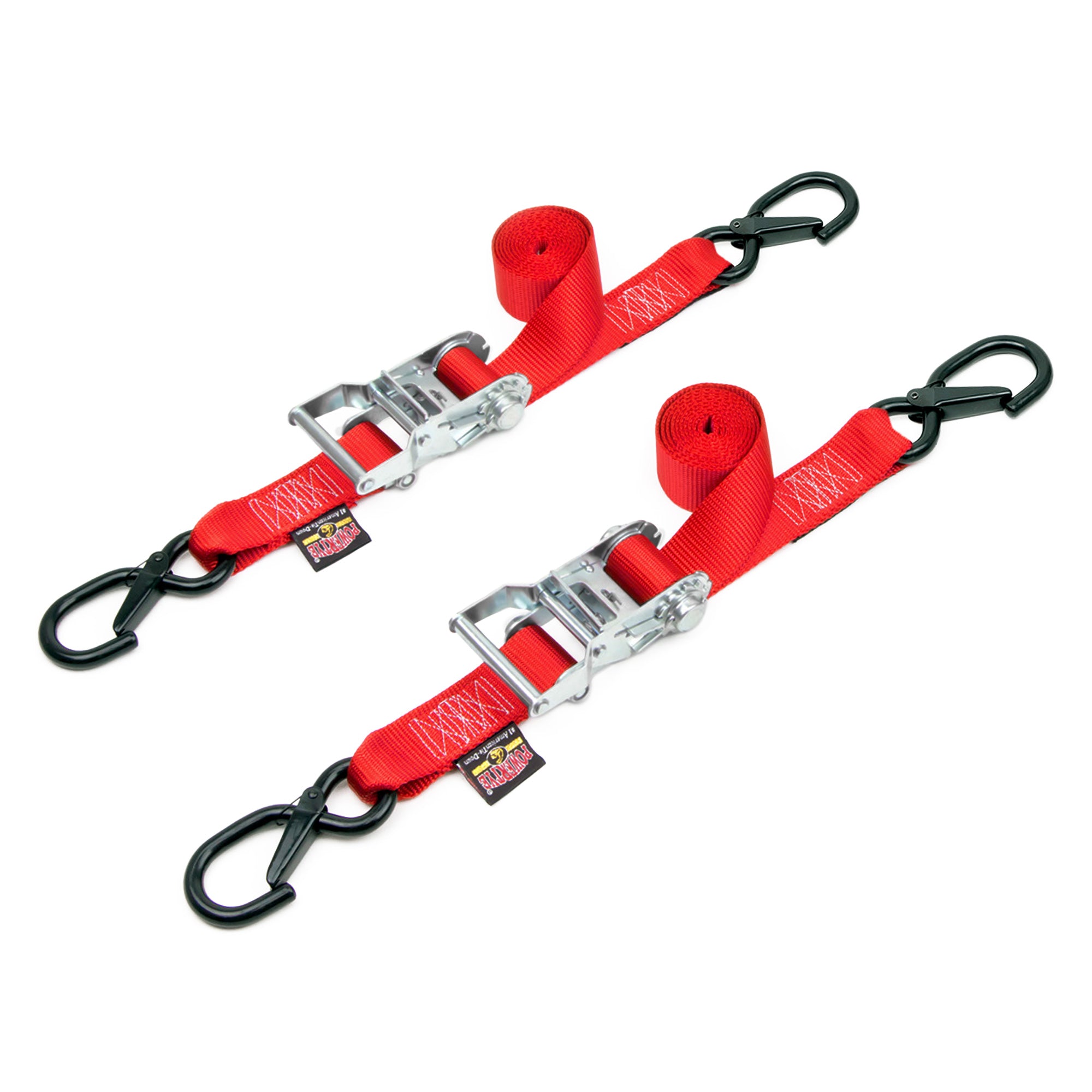
The Core Components of a Motorcycle Ratchet Strap
Before you start using one, it helps to understand what you are working with.
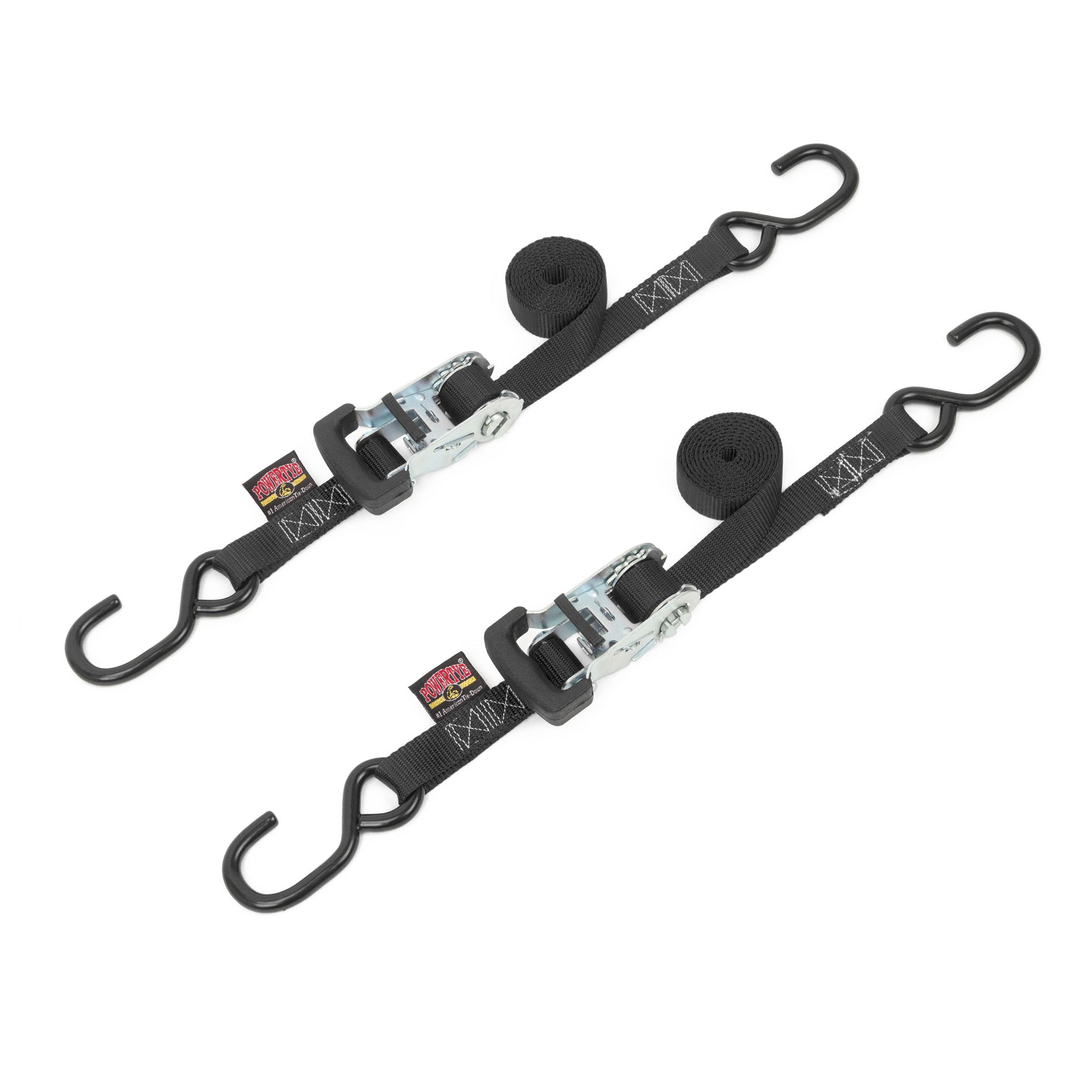
Ratchet Mechanism
This is the metal handle assembly. It contains the gears and locking pawl that allow one-way tightening.
Webbing Strap
Heavy-duty polyester webbing connects the ratchet to the hook end. PowerTye straps are known for thick, abrasion-resistant webbing that does not stretch under load.
Hooks
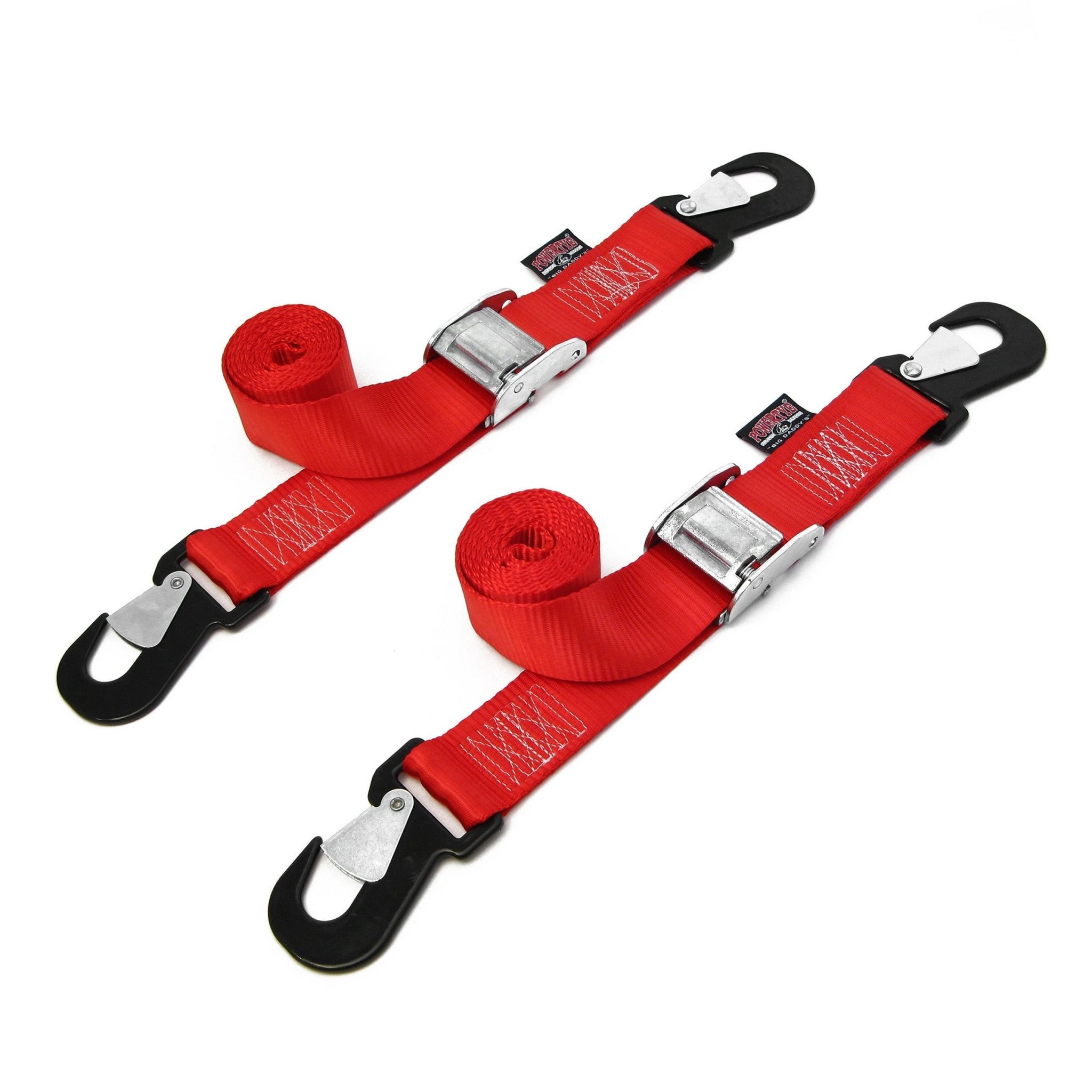
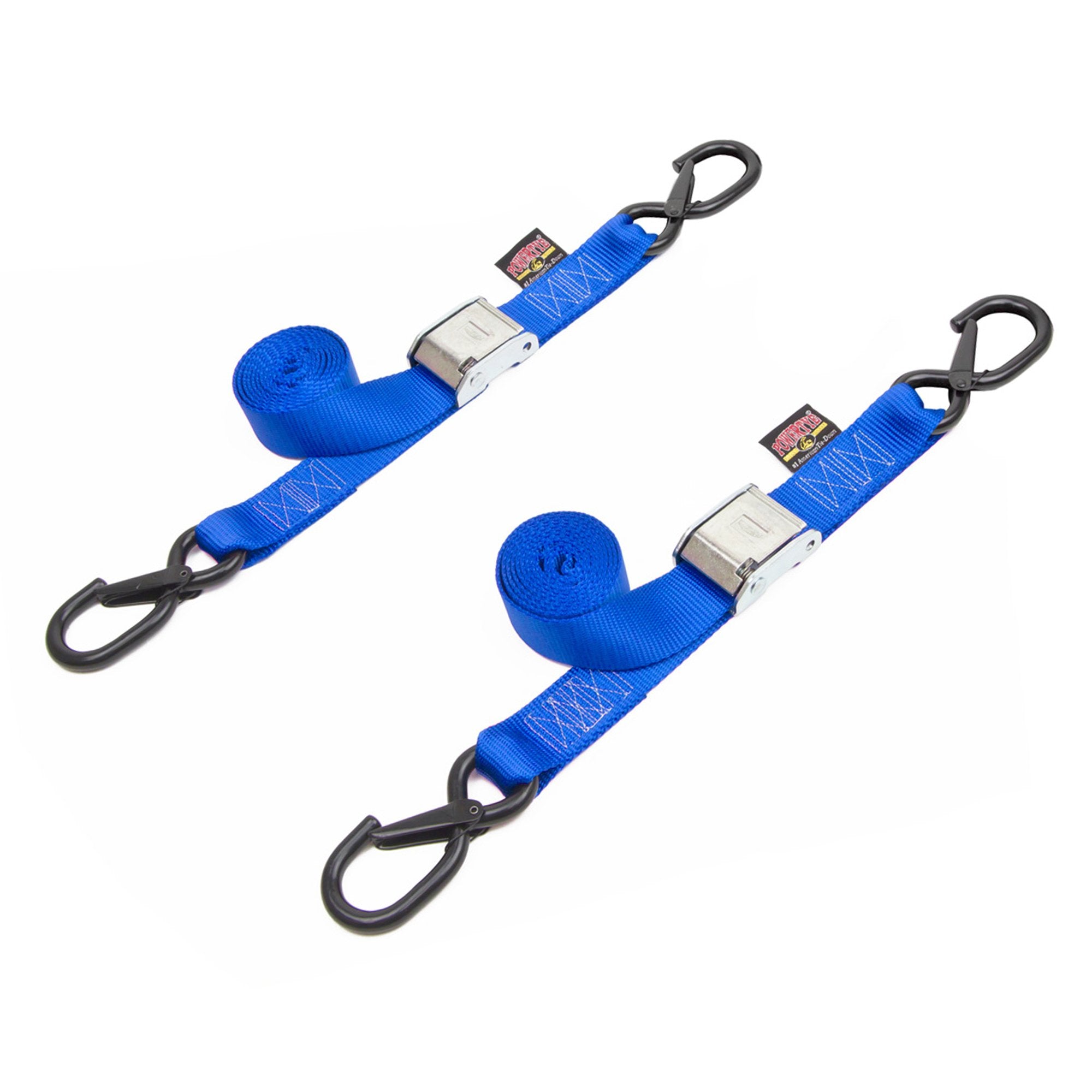
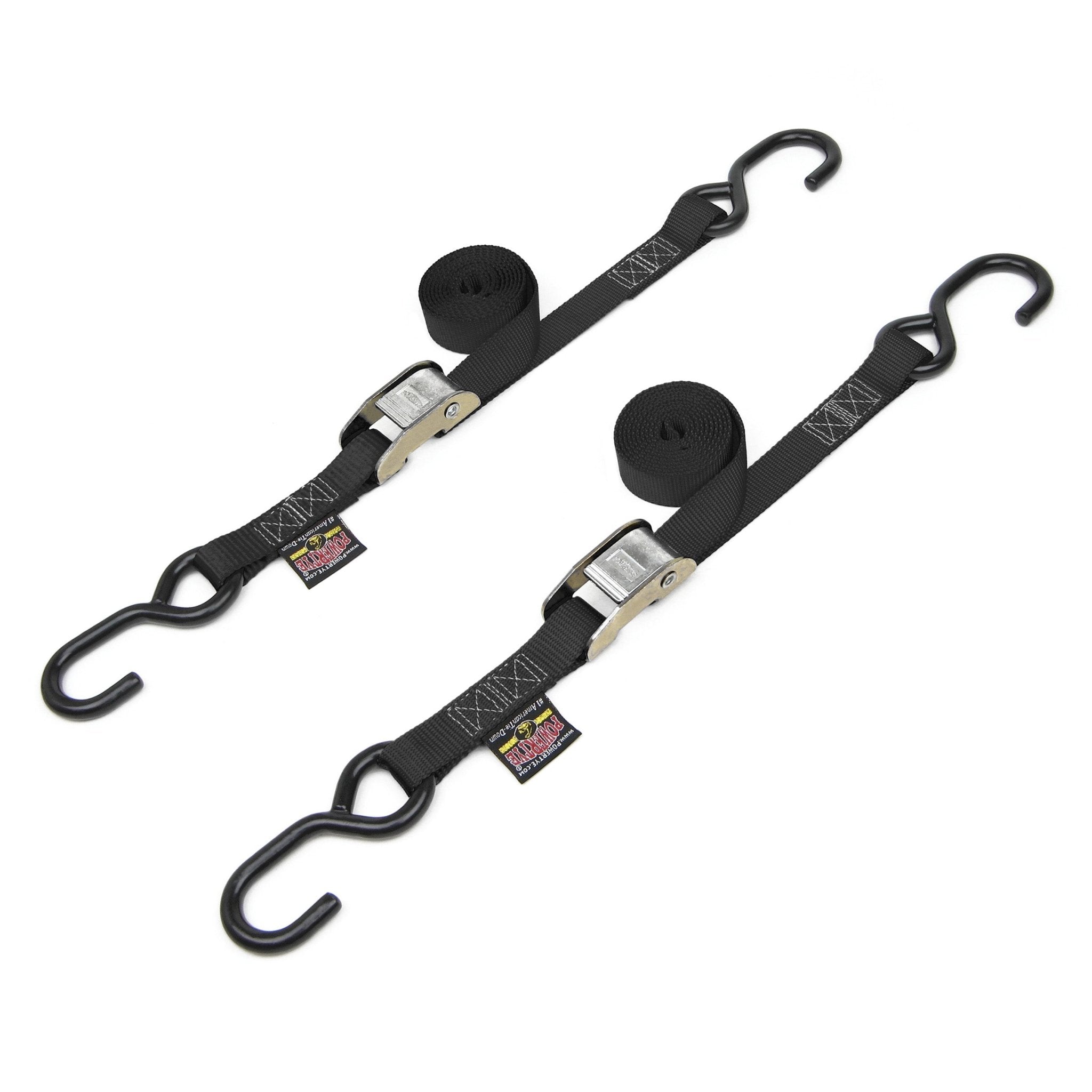
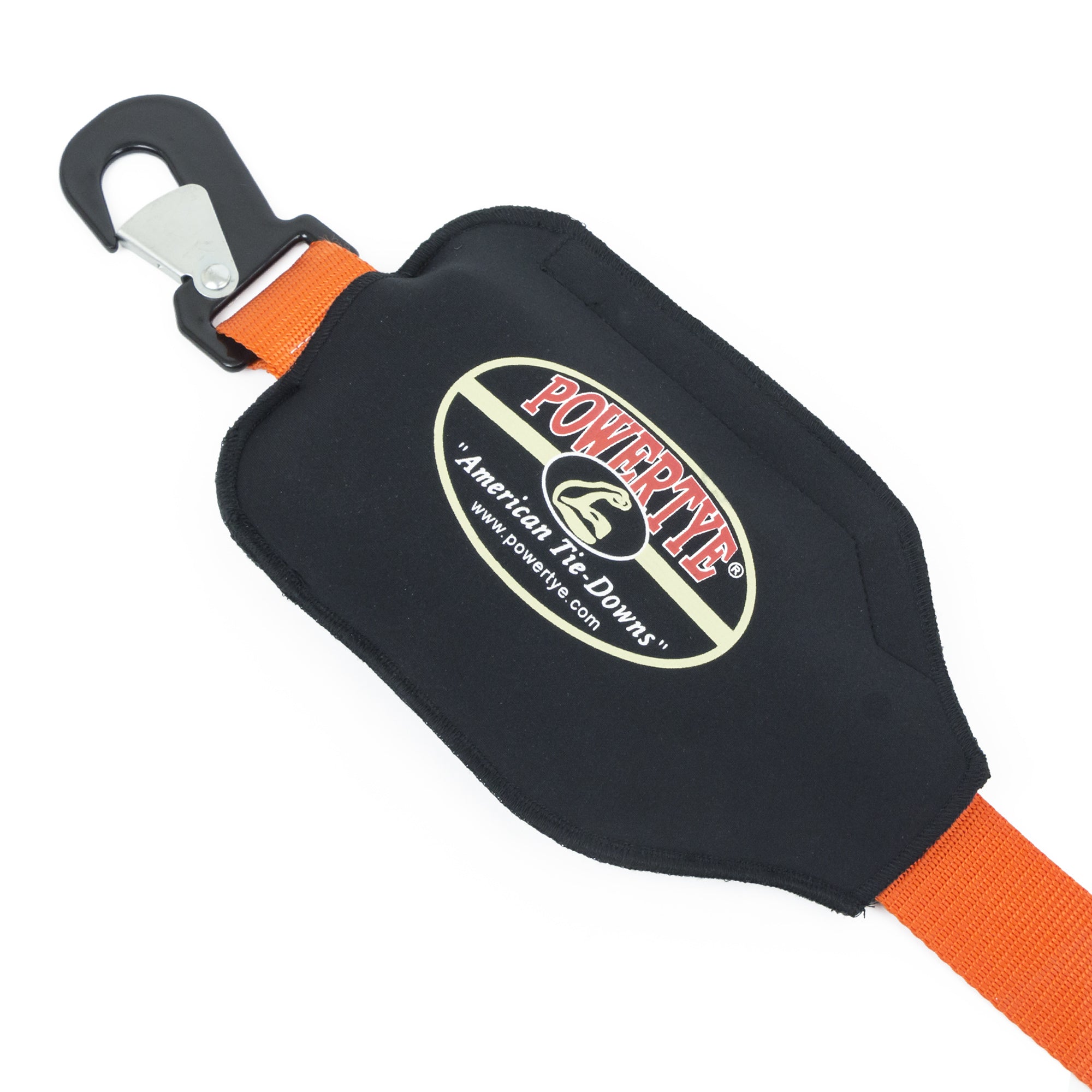
Most motorcycle ratchet straps use vinyl-coated S-hooks. The coating protects your trailer or truck anchor points from damage.
Soft-Ties
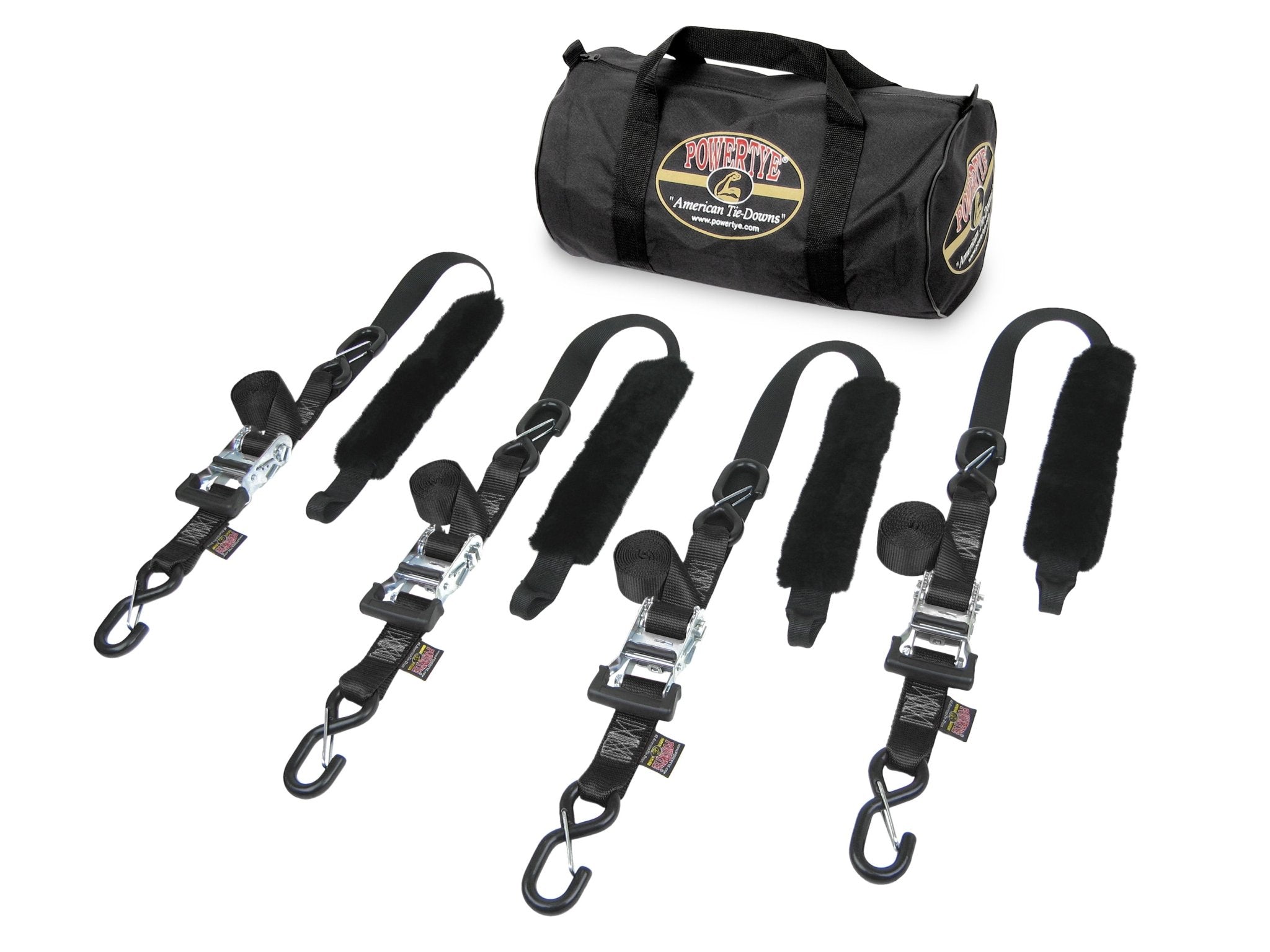
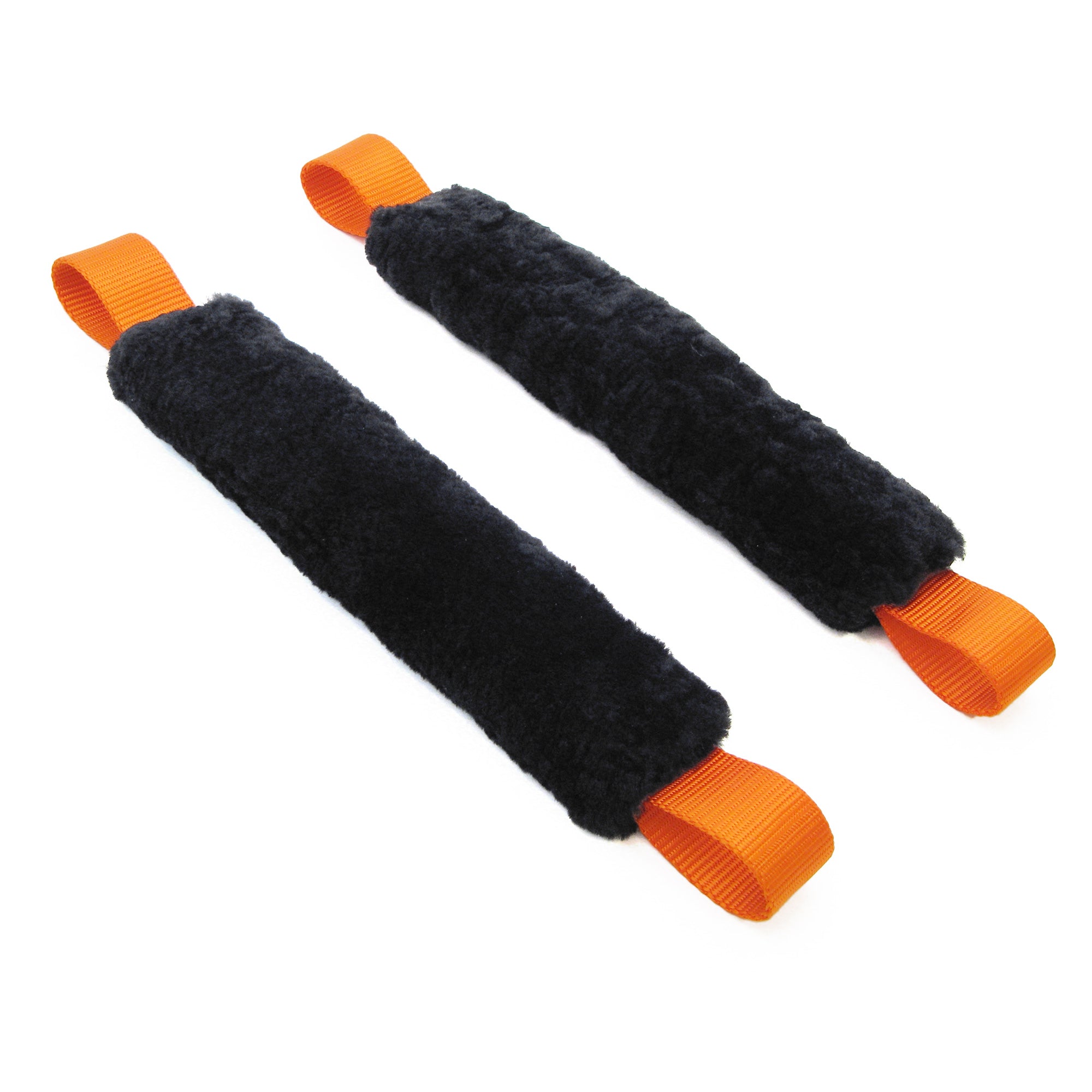
Soft-ties are not part of the ratchet itself, but they are critical. PowerTye soft-ties wrap around handlebars, triple trees, or frames to create a safe attachment point without metal-on-metal contact.
Step-by-Step: How to Secure a Motorcycle With a Motorcycle Ratchet
This is the method riders rely on when they cannot afford mistakes.
Step 1: Position the Bike Correctly
Center the motorcycle in the truck bed or trailer. The front wheel should be straight and seated firmly against a wheel chock or front rail.
If you do not use a wheel chock, push the tire tight against the front wall of the trailer. Stability starts here.
Step 2: Attach Soft-Ties to the Front of the Bike
Wrap PowerTye soft-ties around solid, non-moving parts. The lower triple tree or handlebars near the clamps are common choices.
Avoid wrapping around cables, hoses, or plastic.
Make sure the soft-ties are even on both sides.
Step 3: Connect the Ratchet Straps
Hook the ratchet strap ends to the soft-ties. Then hook the ratchet ends to your trailer or truck anchor points.
Angle the straps forward and outward at about 45 degrees. This creates forward tension and side-to-side stability.
Step 4: Tighten the Front Straps Evenly
This is where the motorcycle ratchet shines.
Pump each ratchet slowly, alternating sides. Compress the front suspension slightly, but do not bottom it out. You want tension, not max compression.
The bike should stand upright without help once properly tensioned.
Step 5: Secure the Rear of the Bike
Rear straps add stability, not primary support.
Attach straps to solid rear points such as passenger peg brackets or the frame, never to exhaust components.
Tighten just enough to prevent side-to-side movement.
Step 6: Check and Recheck
Shake the bike firmly. It should move as a unit with the trailer, not independently.
After driving a few miles, stop and recheck tension. Webbing can settle slightly.
Common Motorcycle Ratchet Mistakes Riders Make
Even experienced riders can slip up. Here are the big ones.
Over-Tightening the Suspension
Cranking the ratchet as hard as possible can damage fork seals and suspension components. Tight is good. Fully bottomed out is not.
Skipping Soft-Ties
Metal hooks directly on handlebars or frames cause scratches, gouges, and stress points. Soft-ties exist for a reason.
Uneven Strap Tension
If one side is tighter than the other, the bike can lean and walk during transport.
Relying on One Strap Per Side Only
Two points of contact are not enough. Always secure both front and rear.
Using Worn or Frayed Straps
If webbing looks fuzzy, cut, or sun-damaged, replace it. Tie-down failure usually starts with ignored wear.
Motorcycle Ratchet Safety Tips From Real-World Hauling
These tips come from experience, not theory.
Always Close the Ratchet Fully
After tightening, close the ratchet handle completely. This locks the mechanism and prevents accidental release.
Secure Loose Strap Ends
Flapping webbing can fray, slap paint, or catch wind. Tie off excess strap.
Use Quality Anchor Points
Make sure your trailer D-rings or truck bed anchors are rated and bolted securely.
Never Trust One Strap Alone
Redundancy is safety. If one strap fails, others should keep the bike upright.
Choosing the Right PowerTye Motorcycle Ratchet Products
PowerTye has built its reputation by focusing specifically on motorcycle transport. Here is how to choose the right setup using only PowerTye products.
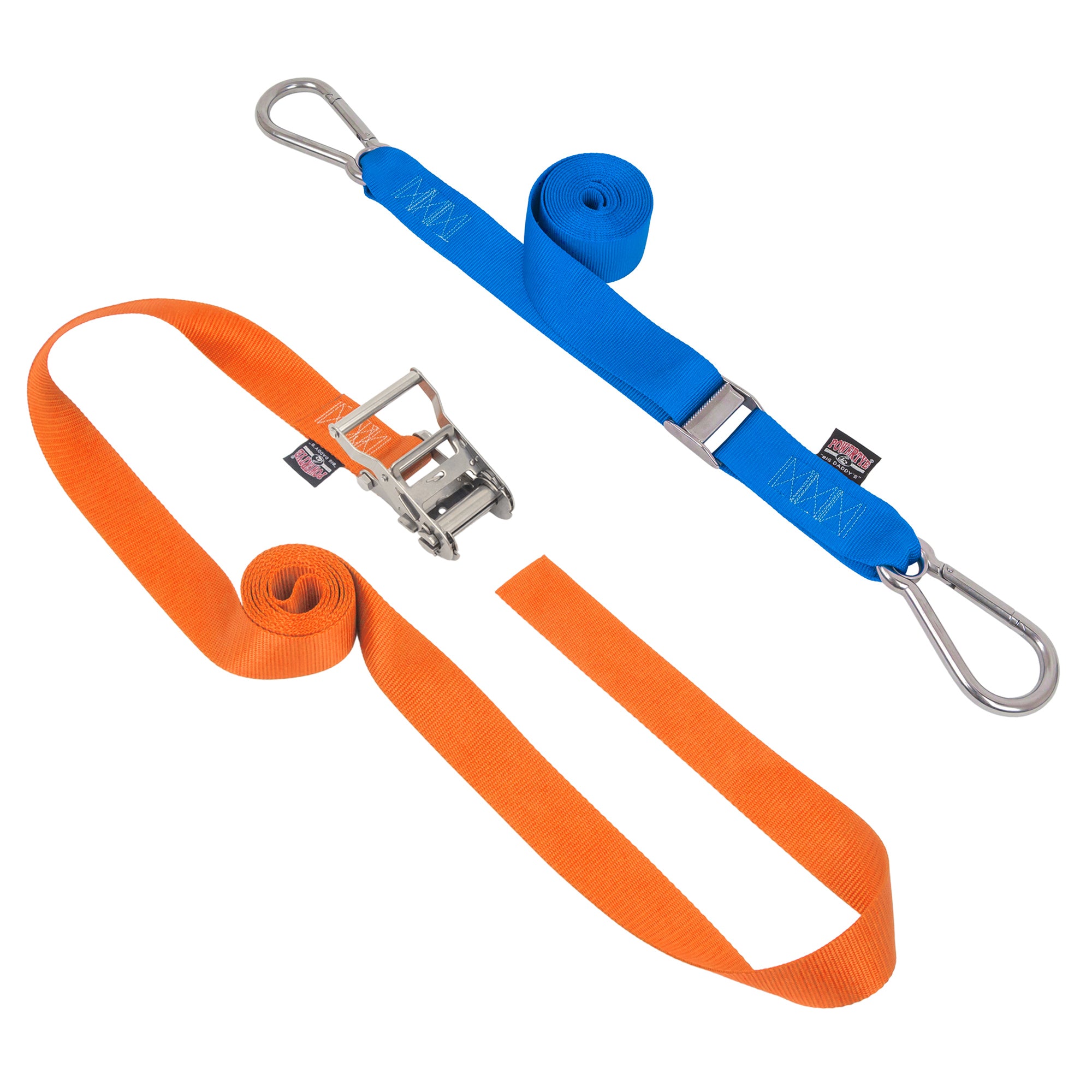
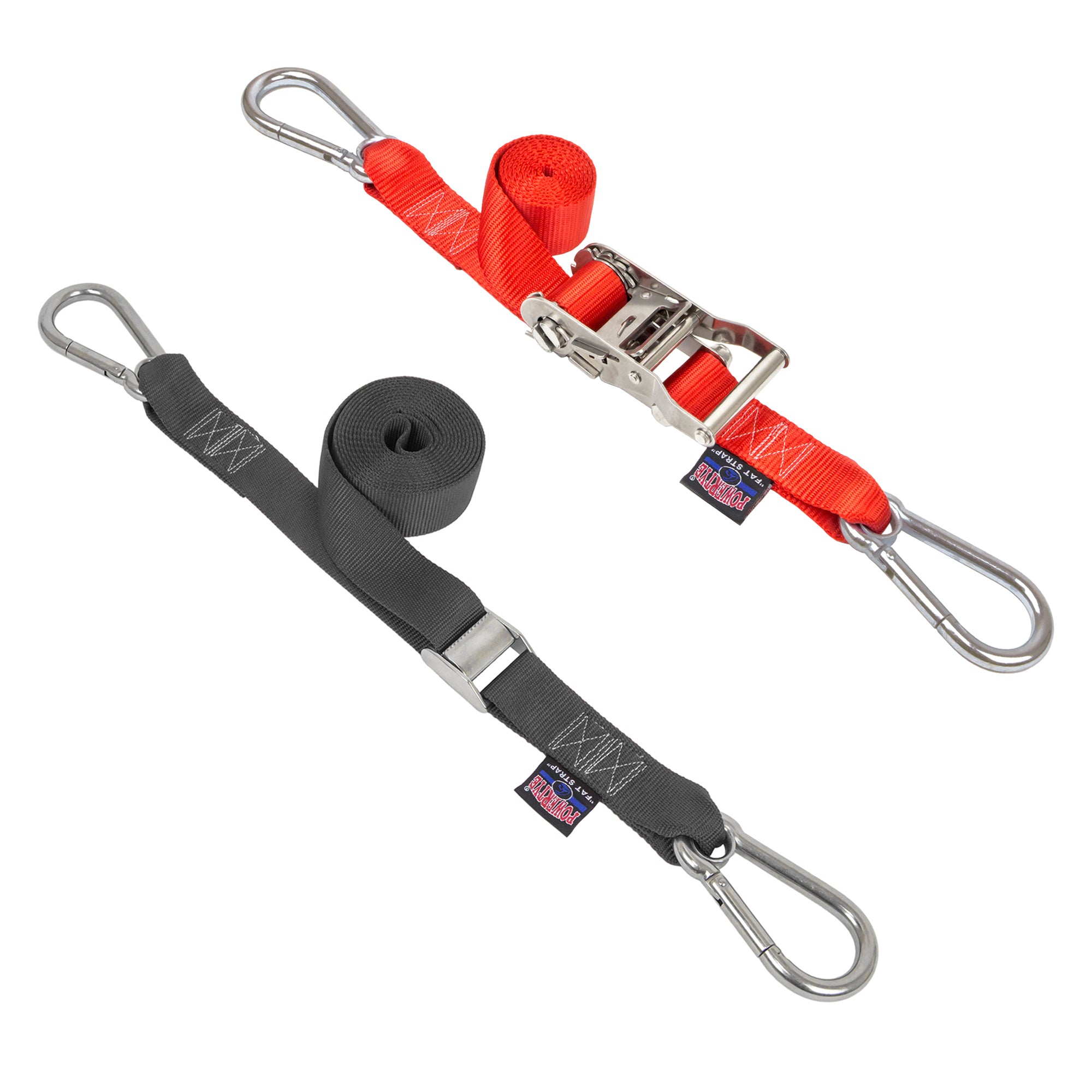
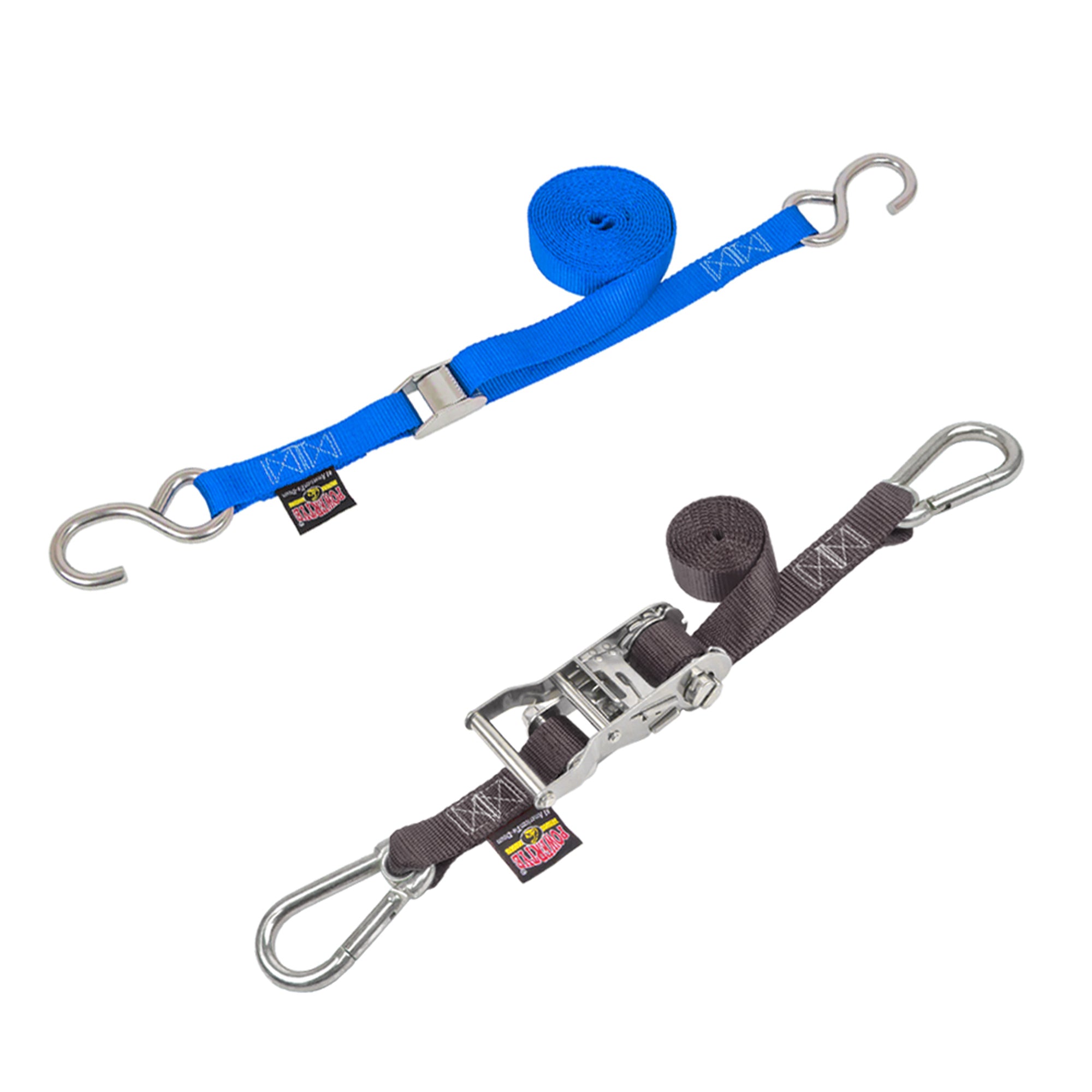
Ratchet Tie-Down Straps
PowerTye ratchet tie-downs are designed for motorcycles, not generic cargo. Look for options with vinyl-coated hooks and heavy-duty webbing.
Standard-length ratchet straps work for most trailers and truck beds.
Soft-Ties
PowerTye soft-ties come in various loop lengths and strength ratings. Short soft-ties work well on triple trees. Longer ones are useful for frames or larger bikes.
Every rider should own multiple pairs.
Retractable Ratchet Tie-Downs
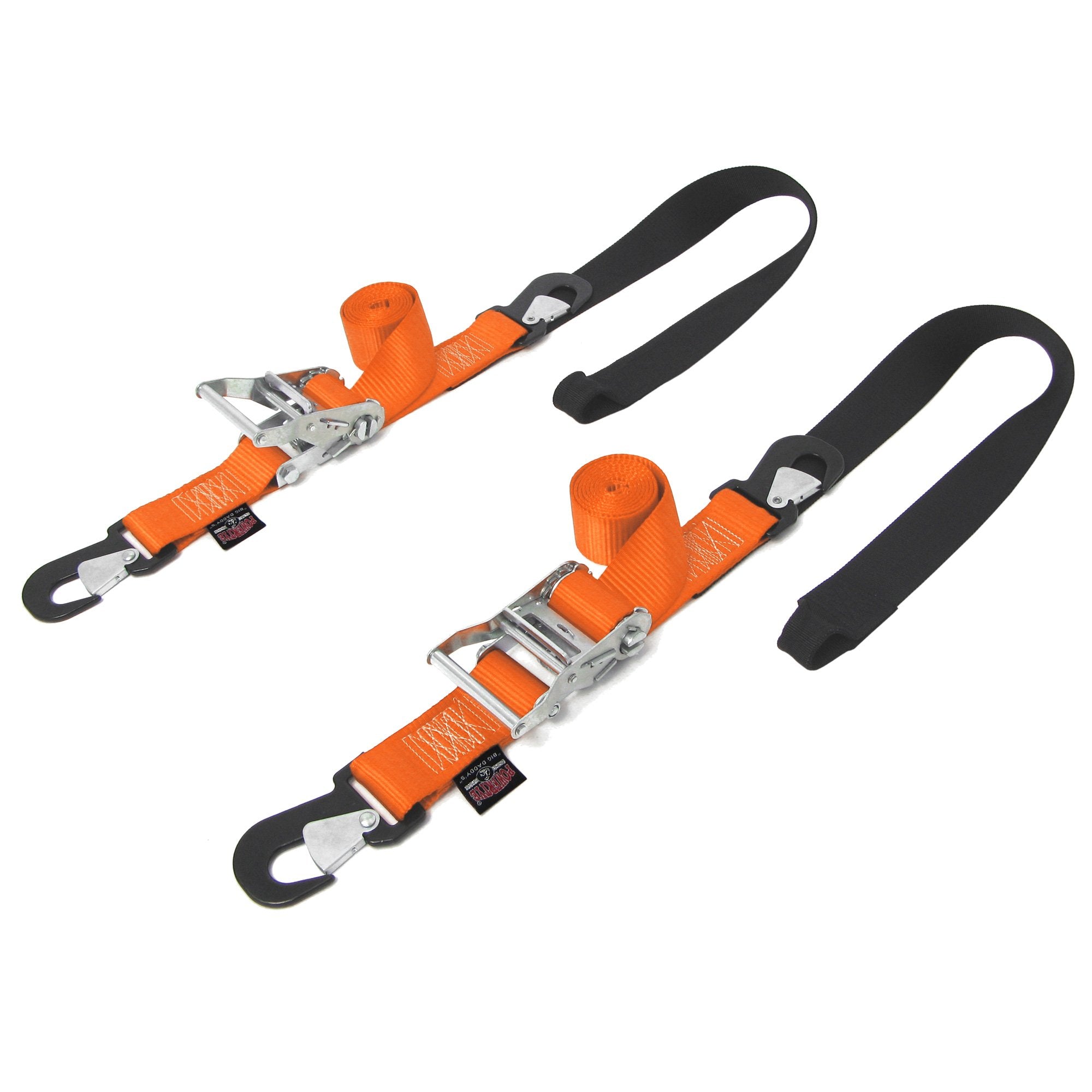
For riders who want speed and organization, PowerTye retractable ratchet tie-downs eliminate loose strap management. They are especially popular with track riders who load and unload often.
Handlebar and Triple Tree Options
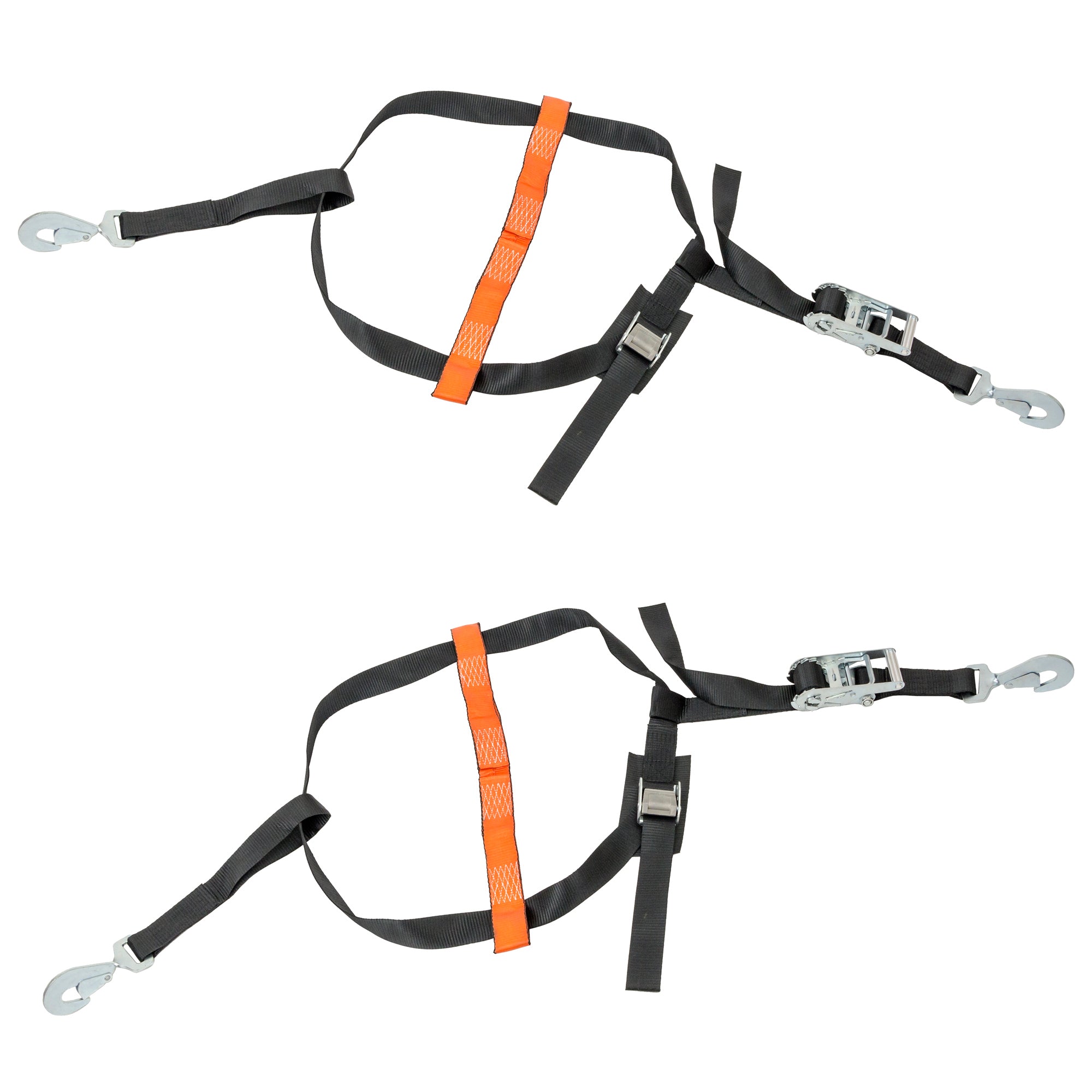
PowerTye offers solutions specifically designed to reduce stress on handlebars by allowing secure attachment lower on the bike.
When in doubt, choose a setup that minimizes pressure on delicate components.

Maintenance and Care for Motorcycle Ratchet Straps
A well-maintained tie-down lasts longer and performs better.
Clean After Use
Dirt, grit, and road grime accelerate wear. Wipe straps down after hauling, especially after rain or mud.
Store Out of Sunlight
UV exposure weakens webbing over time. Store your PowerTye straps in a bag or toolbox.
Inspect Before Every Trip
Check stitching, webbing, and ratchet teeth. If something looks questionable, replace it.
Lubricate the Ratchet Mechanism Lightly
A small amount of light lubricant keeps the ratchet action smooth. Avoid soaking the webbing.
FAQ: Motorcycle Ratchet Questions Riders Ask Most
What is the difference between a motorcycle ratchet and a cam buckle strap?
A motorcycle ratchet uses a geared mechanism to lock tension in place, while a cam buckle relies on spring pressure. Ratchets provide more security for long-distance hauling.
How tight should a motorcycle ratchet be?
Tight enough to slightly compress the suspension and prevent movement, but not so tight that the suspension is fully bottomed out.
Do I need soft-ties with ratchet straps?
Yes. Soft-ties protect your bike and provide safer attachment points.
Can ratchet straps damage my motorcycle?
Improper use can cause damage. Correct placement and controlled tension prevent issues.
How many ratchet straps do I need to haul a motorcycle?
Four is the standard. Two in front and two in back.
Are PowerTye ratchet straps reusable?
Absolutely. With proper care and inspection, they last for years.
Should I check straps during a long trip?
Yes. Stop after the first few miles and periodically after that to ensure nothing has loosened.
Conclusion: Haul With Confidence Using the Right Motorcycle Ratchet
Hauling a motorcycle does not have to be stressful. When you understand how a motorcycle ratchet works and use it correctly, you remove the guesswork and the risk.
The difference between a nervous drive and a confident one often comes down to the quality of your tie-downs and your technique. PowerTye has earned trust by building products specifically for riders who demand reliability.
If you care about your bike, your safety, and your peace of mind, invest in proper ratchet tie-downs, use soft-ties every time, and follow proven methods.
Ready to upgrade your setup?
Shop PowerTye and haul your motorcycle the right way, every mile of the journey.